Showing posts with label Cell Phones. Show all posts

Monday, September 26, 2011

Which Mobile OS?

When you look at the dozens of phones available to you, what do you look for; the physical device, with it's mirror-like screen and brushed aluminium finish, or do you consider what makes each phone perform the myriad tasks you intend performing? If you haven't thought in these terms, you should. You're about to lay down a sizable chunk of your hard earned cash, or tie yourself into an expensive 24 month contract, and you should really know what you're buying.

To me, it's all about the software. These days, the main manufacturers are all capable of making exceptional devices that vary little from each other in terms of hardware. However, the software is constantly evolving and improving, and if you pick the right phone, you'll continue to get updates and upgrades that will improve your experience, and even after 2 years, you won't feel like you're stuck with old technology.

As can be seen from the graph of worldwide 2011 Q2 smartphone sales to end users by operating system, according to Gartner, Android has clearly captured the lion's share of the market, up 13,3% since 2010, with its multiple manufacturer support from Samsung, HTC, Motorolla, LG and Sony Ericsson. However, Google's purchase of Motorolla could spell trouble for Android if the other manufacturers feel like they're not getting equal treatment and start looking to other OS's for their premium models. Android has another problem, and that is despite regular update to the core OS, these often aren't rolled out to every device, and it's left to the manufacturers, and then the carriers to decide which phones should get upgraded. Google are trying to address this problem, and it may improve with their newer phones.


Symbian may be in 2nd place, but don't be fooled. Symbian is in freefall, losing more than 10% in the last year, and down from complete market domination just 4 years ago, when they held 63,5%.


Apple's iOS takes 3rd place, and considering they essentially only have a single, premium handset (plus a discounted previous generation model) available, that's pretty good. iOS is actually still gaining market share, and I expect continued growth as the next generation is made available to more carriers in the key US market. The launch of iOS5 and the next generation iPhone will also see renewed demand for the iconic device. Where Apple really scores is that they release software updates directly to the customer, so everyone gets to run the latest version all the time, and Apple continue to make their software backwards compatible for several generations.


RIM hold on to 4th place with their Blackberry range, but they're down nearly 4% since a high of nearly 20% in 2009, and despite popularity with text hungry teens, management problems continue to plague the company that was once considered the trendsetter. Their OS is dated; the newly released Blackberry 7 is too little, too late. Blackberry QNX might save them, but launch timing has been pushed out numerous times, so don't hold your breath. 


The dark horse is Microsoft's Windows Phone 7. While it hasn't captured much share yet, Nokia will launch a range of phones before the end of 2011, which may turn things around for the software giant. They've also recently launched a preview of Windows 8, which will use a common format, borrowed from Phone 7, across all devices, from desktops to tablets and mobile phones. This is huge - who wouldn't want a phone that looks and acts just like all their other devices, and sync up seamlessly via the cloud? The jury is still out on whether the UI is suitable for non-touch screens, but regardless, the tie-up with Nokia will be sufficient to see some substantial growth over the next 2 years.


So where does this leave us? There is room for 3, maybe 4 OS's in the market. Why not more? Key to the success of any modern OS is the availability of apps to run on these devices, and developers will not support an infinite number of systems. Android and Apple currently rule the roost, so it'll be between Phone 7 and Blackberry OS to take 3rd. My money would be on Phone 7, because Microsoft have too much money to let it fail. That will leave Blackberry to battle on in 4th place, with a shrinking market share.


So when you're confronted with all those shiny new phones that promise so much, think about where those brands will be in a years time, because you don't want to be stuck with a device that is no longer supported.


Thanks for reading.


Sunday, September 25, 2011

Mobile Messenger Services Are A Mess

The IM sector is red hot again these days, as people turn to these services to replace the ridiculously overpriced SMS services offered by the carriers. RIM have managed to do this very successfully with their BBM messaging service, despite the fact that BBM is limited to Blackberry devices. For many, this is the number one reason to purchase a Blackberry. In the teen market this is currently the phone of choice.

Seeing the success that RIM has had with this strategy, Google and Apple have rushed to bring similar products to market.

Google's strategy is a bit confusing. Google Chat (or is it Google Talk?) has been developed into a great IM package that works across desktop and mobile, and includes video, SMS, group chat and more. Then along comes the Google+ mobile app and now we have Huddle, a very simple group chat app, built into the G+ app. Now I'm not technical, but why didn't Google just incorporate their existing IM package? Huddle has now been updated to include photo sharing, and simultaneously changed its name to Messenger. The problem with this service is that it's mobile only. For me, turning away from my desktop, with it's large ergonomic keyboard, to reply to a message on my phone, with it's tiny keyboard, is very frustrating. It makes no sense at all!

In early October (hopefully) Apple will release iOS5 into the wild, and one of the new features is iMesenger. I believe it will work across mobile and desktop, but will unfortunately be limited to Apple devices, which makes it pretty useless. I understand that the strategy is to turn each iPhone user into a salesperson: "Get an iPhone like mine and we can chat for free!" It hasn't worked with Facetime, and it won't work here. Really Apple, am I only allowed to be friends with people that also use Apple products? C'mon!

I'm not a Facebook fan, but at least they got this right. Well almost. Facebook Messenger works in the browser and in their mobile app, and now Facebook have launched a separate Messenger app for smartphones, which is a great idea, as you don't have to open the main app first. Are you listening Google? The problem: you can only chat with people you have friended on Facebook. I don't want all my work colleagues following my social activities on Facebook, but it would be useful if I could text them!

A number of startups have also attempted to gain some traction in this sector. Beluga was gaining in popularity, but Facebook bought them out, and created their Messenger service. Whatsapp has a big following, and it's not OS specific, but there is no desktop version available, so it's mobile only.

So what's the answer? Currently, I use Google Talk/Chat, Google+ Messenger, Facebook Messenger, Whatsapp, and when iOS5 comes out I'll also use iMessenger. With my Blackberry carrying friends I feel a bit left out, and have to hope they use Whatsapp. Of course, in an emergency, good old SMS is still available, but I would love to be able to move away from SMS entirely. Until one of these companies can build all this functionality into one app, I'm forced to keep using a combination, depending on whom I'm chatting with. What a mess!

And who owns the rights to the Messenger name anyway?

Thanks for reading.
Wednesday, December 29, 2010

The best bike computer that you can't buy...!

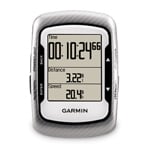
Cycling computers have evolved over the last 10 years. Remember when you had to have a wire running from the sensor on your fork up the the handlebar mounted unit that displayed speed and distance, and that was it. The big breakthrough came with wireless units - I remember my Cateye Cordless 7 being the envy of the day! Then Polar came along and suddenly you could have heart rate, and even altitude on your computer. In my opinion, and in the opinion of no less a blogging authority than the Fat Cyclist, the best bike computer currently available is the Garmin Edge 500, which adds GPS. However, at about R2,400 (or $250 in the States), this is an expensive bit of kit.
Now, if you ask any cyclist to turn out his pockets at the end of a ride, in amongst an assortment of keys, mini-tools and sticky energy bar wrappers, you'll always find a cell phone. And most top-end phones include GPS, so why should we have to pay twice for it? There are numerous apps available for Android, iOS and Symbian phones designed for runners and cyclists, and most of them have a free version. Most rides I go on I track with my phone - I love being able to sit at my computer and see my exact route, speed at each km point, altitude etc.
The problem is, most modern smartphones are a bit big to strap to your handlebars, and their screens are notoriously difficult to read in direct sunlight.
And then I saw the Sony LiveView micro display, and the answer was revealed to me! This is a tiny, Bluetooth connected device that gives a status linked to your phone, letting you control your music or see your Facebook updates. It's so small it can even be worn as a watch! Unfortunately, with only a 1.3" display the LiveView would be a bit small, and with an LED display would almost definitely have the same problems in sunlight as a fully fledged smartphone. The ideal bike computer would have an LCD display similar in size to the Garmin Edge 500 above, but the unit would link via bluetooth to your smartphone which would be doing all the heavy lifting! Even with it's expensive OLED display the LiveView is retailing for only $100, so I figure with a cheaper but slightly larger LCD screen, my device needn't cost any more than that! Any takers?


Thanks for reading.

Wednesday, May 19, 2010

Nokia N97 Mini

My friends at Nokia SA delivered a package to my office last week. It came as a bit of a surprise, as it's been a while since they've made contact. However, imagine my delight to find an N97 Mini - mine to evaluate for a couple of weeks.

For those not familiar with the Mini, it is the little brother of the 'N' Series flagship model, the N97. As the name would imply, the Mini is smaller is all directions, and is also lighter by 22g. The main differentiating features are the lack of the 'D' Pad, and the 3.2" screen, compared to the 3.5" of its big brother. The mini doesn't have a camera lens protector, but shares the same 5MP camera and dual LED flash. Internally, the key difference is a reduction in the internal memory, from 32GB to 8GB; still plenty for your music files and photos. If you do need more memory the Mini also supports up to 16GB expansion via microSD.

The N97 Mini runs the same Symbian OS as my Nokia 5800XM; S60V5, and so the menu structure was immediately familiar. However, the N97 and the Mini have a far nicer homescreen than the 5800; it has six customisable widgets that can show a selection of contacts, calendar, apps, or online feeds like weather or Facebook. The 640 x 360 pixel TFT display looks great indoors, but suffers in direct sunlight; something that South Africans need to consider when buying a touchscreen phone!

I have never been a fan of slide out qwerty keyboards, but the N97 Mini changed my mind. With S60V5, many apps and websites, and even Nokia's own messaging app, have not been optimised for touch. For example, if you want to send an SMS, you'll first be taken to the text screen that Nokia uses on it's normal numeric keyboard phones. Then you have to tap the screen, and you get taken to the touch screen. You enter your text, tap OK, and you go back to the text screen. Very convoluted! With the qwerty keyboard, you can type in directly from the first screen. This makes the work flow so much simpler!

The slide-out keyboard is a beautiful piece of engineering. As the keyboard slides out, the screen tilts to a convenient angle for viewing the display. This configuration also lends itself to putting the phone on a table and typing 2-handed, like a very tiny laptop. Unfortunately, while this works quite well on the N97, the off-centre design of the camera lens housing means that the phone doesn't sit flat on a table, and typing causes the phone to rock annoyingly!

The loan phone I was testing came loaded with the latest version 3.0 of Ovi Maps. This free to download app rocks! It offers voice-guided, turn-by-turn navigation, and works without a data connection, so you don't face a horrendous bill at the end of the month. You do need to upload the map for your country, as well as the voice for the guide, but this can be done on a PC and synced to your phone. Used with the provided windshield mounting, this offers a very real alternative to the dedicated GPS systems, as long as you're happy with the slightly smaller screen.

If you're choosing between the N97 and the N97 Mini, both are great phones, even if the OS is a bit limited. The Mini is cheaper, lighter and more compact, but loses out on some memory and battery life. On the other hand, if you're upgrading from a classic styled phone, and you're looking for a phone that'll look good on the board room table, this is a great option. If you don't need the qwerty keyboard, have a look at the recently released X6, or wait for the new N8 which runs the all new Symbian ^3 OS.


Thanks for reading!

Friday, January 8, 2010

The Awesome Nokia X6

If you live in North America and want a smartphone, you probably only think iPhone, or one of various Android devices, like the Motorola Droid or the HTC Nexus One. However, if you live in Europe, or as I do, in South Africa, Nokia dominates the market.

Nokia entered the touchscreen market with the 5800 XpressMusic, and has followed up with a number of similar, yet slightly differently featured 'entertainment' phones, like the 5130, which also saw the introduction the the successful "Comes With Music" package in South Africa. This offers consumers unlimited downloads to the entire Nokia Music Store catalogue, which currently has over 6-million digital tracks, and this offering is valid for a one year period.

Now Nokia has launched the X6 (note all future XpressMusic phones will now be prefaced by an 'X') in South Africa as it's new flagship model. At only 13.8mm thick it is less than half the size of the 5800, but now includes a 3.2" capacitive touch screen with a resolution of 640 x 360 pixels. In a departure for Nokia, the X6 comes with 32GB of internal memory, as apposed to the microSD cards used on most of it's phones. It's also got a 5 megapixel camera equipped with a Carl Zeiss lens. With a standby time of over 400 hrs, a talk time of over 8 hrs, and 35 hrs of music playback, this phone sure has the power needed for all your entertainment needs.
Quoting from the Nokia Press Release:
"The Nokia X6 is the ultimate device for social butterflies, bringing friends and virtual communities, like Facebook, to the homescreen thus making it easy to socialise with friends and follow all the favourite blogs and celeb gossip. The device has a 16:9 widescreen which is optimised for photo and imaging display, web browsing, video recording and gaming."
I haven't been able to get my hands on one of these beauties yet, but I'll be sure to post my comments as soon as I do.


Thanks for reading.

Sunday, October 18, 2009

Nokia N79 with Sports Tracker


I recently blogged about the brilliant Sports Tracker program available in Nokia Beta Labs. Running on my 5800 XM phone, I was very impressed with this program, although it lacked some features that would make it a potential replacement for my regular Polar CS200 cycling computer. The most obvious of these is the lack of a heart rate monitor (HRM).

Shortly thereafter I was contacted by Nokia SA to see if I would like to trial the N79, which has a unique HRM belt designed in conjunction with Polar, specifically for this phone. I jumped at the chance.

In this post I will concentrate on the Sports Tracker application running on the N79, and not on the phone itself. Needless to say, as an N Series phone, the build quality is great, and the compact package includes such features as changeable Xpress-on™ smart covers, a 5 megapixel camera and integrated A-GPS. Pretty good considering the phone was released in August ’08.

I received the phone pre-loaded with version 2.06 of Sports Tracker. I was a bit thrown at first, but eventually figured out that there is no physical button to access the menu, and instead you press the area between the buttons to the left of the D-pad. This allowed me into the applications, and the Sports tracker application itself. Scrolling down to Settings, I was able to access the setup wizard for the HRM. The phone uses Bluetooth to connect to the HRM Belt, and it quickly paired itself to the belt.


Then it was simply a case of selecting the workout mode, waiting for the GPS to connect, and I was away. In the box, along with the phone and the HRM belt, was a handy pouch to allow the phone to be carried strapped to your upper arm. This position also allows one to easily attach a pair of headphones so you can listen to your favourite tunes while exercising. However, I did not really like this position while cycling, which was a pity. A handlebar mounting would have been better.

On the go, there are a number of real time outputs you can watch while you train. These include various options for speed, altitude, time and distance, as well as the all important heart rate. There are also graphs for HR/speed/altitude vs time, as well as the time spent in each of 3 HR zones calculated by the program based on age and gender. These can also be manually adjusted if you have specific zones you want to target. As with the version of Sports Tracker I have been running on my 5800, there is also a live mapping feature, and you have the option to allow the program to download the necessary maps, or just to let it run on a plain background.

At the completion of your training session, you then have the option to upload your training session to the Sports Tracker web site, where you have the option to share it with friends. On the website, the map of your route is shown courtesy of Google Maps. One of my favourite features is that any photos taken along the route are shown on the map, along with what music you were playing!

I really love this program, and it’s made even better with the addition of the HRM features available with the N97. However, there have been several rumours on the web that Nokia is going to discontinue Sports Tracker. In actual fact, Nokia is not killing Sports Tracker, but giving it some wings. Towards the end of 2009 they will be migrating it to Sports Tracking Technologies, a company founded by the creators of Sports Trackers (Ykä Huhtala and Jussi Kaasinen). I only hope that they will continue to develop the program, and keep it free to users.


Many thanks to Lauren for arranging the loan phone.


Thanks for reading.

Monday, September 21, 2009

Mountain Bikes, the Hill2Hill, and Why I Love My Nokia 5800


Yesterday, Sunday 20 September, was the annual Sunday Tribune/Jeep Hill2Hill Mountain Bike Race. The full 100km race is from Hilton, in the KZN midlands to Hillcrest, outside Durban, but for the slightly less fit there is a 43km option starting at Cato Ridge and running the same route through to the finish.


I volunteered to second for my brother on the 43km race, as my own preparation for the race had been hampered by a recent bout of flu. The start at Cato Ridge Golf Club was a chilly 9°C, even at 6:50am when my brother’s group got underway.

OK, so what has this to do with my Nokia 5800? Well, as I prepared to set off to the first spectator point in an area I was unfamiliar with, I activated Garmin Mobile XT application on my phone, which offers full SatNav and turn by turn instructions to keep me on track. I must say that ever since I first experienced SatNav in Japan in 2001, I love the freedom to explore without having to worry about getting lost.

Despite the shortcomings of Nokia Music, the 5800 is a great MP3 player, and connecting it to the car’s sound system allowed me to access all my favourite music from the 8GB memory card, and play it in seamlessly in the background, while still operating the Garmin XT system.


On arrival at the first spectator point I quickly opened Google Latitude’s fantastic S60 application, and was able to easily find my brother’s location in relation to my own, and time his arrival with precision. Great assistance when there were nearly 1,500 entrants streaming past.

While I was waiting, I opened my Twitter account via Snaptu, and was able to send off a couple of Tweets. That’s 4 different applications open simultaneously, and the ability to easily switch between them. Try doing that on an iPhone!


Back to the race. While waiting at the finish for my brother to arrive, the leader of the 100km race, DCM Chrome’s Brandon Stewart, entered the finish arena and took the win in a record time of 3:53, nearly 5 minutes ahead of 2nd place man Ben Melt Swanepoel. An incredible effort, with the winner averaging over 25km/h over some incredibly tough terrain and with over 1,900m of climbing.

My brother came in at a very respectable 3:23 a few minutes later; a great performance for his first competitive MTB race. Next year I hope I’ll be there too.

Thanks for reading.

Wednesday, September 16, 2009

An Interview with Jake Larsen, Head of Nokia Music

I was recently very privileged to have the opportunity to pose a number of questions to Jake Larsen, Head of Music for the Middle East and Africa. This came about as a result of a previous blog post, where I was fairly critical of Nokia Music.

Nokia Music Store

Q: The SA Nokia Music Store was launched on 24 April '09. Now that the initial hype has died down, are visits/download meeting the expectations of Nokia? Do you have figures I can quote?
A: The Nokia Music Store has been received very well in South Africa and we are pleased with both the site visit and download figures. Whilst we do not share sales and traffic information, what is particularly interesting to note is that about a third of all downloads are happening over the air by 3G or wireless LAN.

Q: In SA, what is the split between local and international music on the Nokia Music Store?
A: The catalogue of more than five million songs on the Nokia Music Store is made up of a broad cross section of both local and international tracks from record labels large and small, major and independent. All the majors; Universal, Sony, Emi and Warner are represented as are such notable indie labels as Sheer, African Dope, Next Music and David Gresham. Local content is well supported by local music fans; a great example being Prime Circle who’s single “She Always Gets What She Wants” has been in the top ten for single downloads since the store launched in April 2009.

Q: Many online music stores are now offering DRM-free downloads, most notably iTunes. Why did Nokia launch with DRM, and is there any plan to remove it at a later stage?
A: We are committed to going DRM free with the Nokia Music Store and are talking to the music industry about how we can make this happen.

Q: Additionally, downloads are only offered in the WMA format. Are there any plans to offer the more universally accepted MP3 format?
A: Alternative file formats are currently being explored, but WMA will remain the format for the time being.

Q: Similarly, downloads are being released in 192kbps. This is better than the 128kbps we often see in other Microsoft DRM’d music stores but not quite as good as the 256kbps tracks you can get from iTunes. Are there any plans to offer better quality downloads?
A: The difference in perceivable quality between 192kbps and 256kbps is subjective and one needs to weigh up the balance between file size and audio quality as well as the impact that this has on the cost of the data needed to perform downloads. As mentioned above, alternative file formats are currently being explored, but WMA 192kbps will remain the format for the time being.

Q: I was impressed with the pricing offered - R100 per album is especially good value when compared to +- R160 for a CD. Is this pricing just an introductory 'special'? Will Nokia be able to hold this level of pricing in the longer term?
A: We believe that the pricing of R10 per song and R100 per album represents fantastic value, particularly since the latter is not linked to the number of tracks on an album. There are no current plans to change the pricing on the South African Nokia Music Store.

Q: While the XpressMusic range, especially the 5800, has been pushed quite heavily, there has not been much significant marketing of the Music Store in SA. Are there any plans for more aggressive marketing?
A: We are marketing the Nokia Music Store through various channels on a continuous basis. This includes traditional and online media.

Q: In some countries the "Comes With Music" package is offered with phones like the 5800XM. Why wasn't this strategy adopted for SA?
A: I am happy to let you know that we have just announced Comes With Music for South Africa! The 5130, 5530 and 5630 Comes With Music devices will be in store from the end of September through MTN, Cell C and Nashua Autopage with the 5130 being an MTN exclusive. Comes With Music is a revolutionary new service which provides buyers of Nokia Comes With Music devices unlimited access to the more than 5 000 000 songs on the Nokia Music Store  for 12 months at no cost and allows users to keep all of the music downloaded after the twelve months are up.

Q: The Music Store is only available through the Nokia Music application, or via a mobile app. I understand Nokia's strategy is to control the entire music experience, but many potential users are already quite heavily invested in alternative programmes like iTunes or Windows Media Player, and wouldn't want to switch to another player. Are there any plans to launch general web access?
A: The Nokia Music player is an integral part of the Nokia Music Store experience and acts as a hub for managing you music collection as well as providing an easy and efficient way to transfer music between your pc and device. One can import music from sources other than the Nokia Music Store, such as CDs and music stored on your hard drive, so there is no need to use any other piece of software in order to enjoy your music on device, PC or CD.

Nokia Music

Q: Nokia have entered this particular segment very late, and many people have already aligned themselves to iTunes, Windows Media Player, or one of a dozen alternative players. Currently, Nokia Music is lacking many of the features that consumers now take for granted. The latest release, V1.3, failed to add significantly to the feature set. When can we expect features like filters, auto-playlists, syncing of the play-count and on-phone rating and subsequent syncing to be added?
A: Nokia is the world’s largest manufacturer of digital music players and has operated in the music space for some time now. Our entry into the online retail space was a natural progression in the quest to provide a seamlessly integrated music experience and we are constantly refining the way in which consumers interact with the Nokia Music Store based on research and consumer feedback.

Q: In my experience the Nokia Music player is very slow and cumbersome. For example, there is a frustrating lag when trying to scroll through the library. I currently have a 40GB music library, and I found Nokia Music unusable. Right now there is no way I would switch players. Is this an issue being addressed for subsequent versions?
A: Through the Nokia Music player software, we currently offer the easiest way to load music onto your Nokia device and we aim to develop solutions that offer best in class experiences as the product develops.

Q: The comparison with iTunes is unavoidable. There is a lot of speculation about iTunes 9 at the moment, and the possible introduction of social features. Can you share Nokia's plans for the player going forward?
A: The future of Nokia Music is very exciting! We have just announced Comes With Music and believe it to be the most compelling music offering ever to be introduced in South Africa. Social features are undoubtedly going to be important in the future of music and sharing amongst Comes With Music device owners is an important part of the offering.


Unfortunately, I think Jake has ducked a few of the issues I raised, especially with regard to specific development of the current music player. Most people, when they connect their portable music player (be it a phone or dedicated device) to their PC, are expecting an interface and user experience similar or better than the iPod/iTunes experience. This is not available from Nokia now, and in my personal opinion, this may be the reason Nokia have delayed their Music Store release in the USA.

However, I believe that Nokia have the resources to get it right, and I am confident that Jake's promise of "best in class" will be met. I expect we'll be seeing a number of updates to the Nokia Music player in the coming months, along with corresponding firmware updates for the XpressMusic range of phones (in future to be known as the X Series).

The good news is Nokia are committed to offering DRM free music; some sources saying maybe as early as the end of this year. This may be the other reason the USA launch has been delayed.
I would like to thank Jake Larsen for agreeing to answer my quetions, and to Lauren Marks for facilitating the interview.

Thanks for reading.

Tuesday, July 28, 2009

Nokia Sports Tracker


One of the best apps I have downloaded since acquiring my Nokia 5800 XpressMusic is Nokia Sports Tracker (NST). A Nokia GPS enabled phone is a requirement, and while currently Nokia don't officially support the 5800, Version 2.05 works perfectly on my phone.

After some basic setting up, and entering your NST account details, you choose your activity (walking, running, cycling, skiing and other), wait for the phone to find satellite connections, and then hit start. Touch screen is supported. On the phone screen you'll see your activity time, pace and distance covered. It's not the best UI I've ever seen, but the numbers are big and clear enough. Admittedly, the 5800 screen is hopeless in direct sunlight.


If selected in the options, the block in the top left can incorporate a map, but obviously this will mean using a fair amount of data. On conclusion of your activity, you have the option to upload your workout to the net. After logging in to Sports Tracker, you will see the dashboard, which looks something like this:
The routes taken on all your workouts are colour-coded, and shown on the map beside the summary. Selecting one of the workouts presents you with more detail:
The map, courtesy of Google Maps, is now zoomed in to show your route in detail, with your points of highest and lowest altitude, as well as fastest and lowest speeds indicated. As usual with Google Maps, you can switch between map and satellite modes.

To the right of the map is the profile, showing speed and altitude against time. As you can see, heart rate is also accomodated for owners of the Nokia N79 Active, which comes bundled with a Polar Bluetooth chest strap. To my knowledge these are not available separately, which is a great pity, and a huge oversight.

One of the best features of NST is the ability to upload any photographs taken along your route. The location of each photo is indicated on the map by the camera icon, and clicking it opens a larger view. A great addition!

There is also a nice social aspect to the program, and you can choose to share your workouts with friends, create groups, comment on other people's workouts, and so on.

I'm still pretty new to the service, so there are many features that I haven't touched on here. I already have a very comprehensive cycling computer/heart rate monitor, but it'll be really great to record some of my regular routes to share with friends, and I have already started a group for my local cycling club.

Of some concern, unfortunately, are comments from TheGuru over at symbian-guru.com, that Nokia have lost interest in the service. This would be very disappointing - to my knowledge Apple don't offer anything like this for the iPhone! You can read his blog here.

Thanks for reading.

Monday, June 1, 2009

Nashua Mobile Sucks

An agent from my cell phone service provider (Nashua Mobile) phoned the other day to advise that I was legible for an upgrade if I was prepared to sign-up for another 24 month contract. Standard practice. No objection. I asked him what my options were; I had had my eye on the new Nokia 5800:

Current
Option #1
Option #2a
MTN MyCall 100
MTN AnyTime 200
Vodacom Weekender
Monthly Included Minutes:
85 off peak mins
15 peak minutes
86 any time mins (approx)
120 off peak mins
Once off cost:
R0.00
R0.00
R1,799.00
Cost/month:
R135.00
R257.50
R135.00
Cost/24 months:
R3,240.00
R6,180
R5,039 

Unfortunately, MTN have discontinued their popular MyCall 100 package, so my preference was for the Vodacom Weekender; it offered the most similar package to my current package, which had always been adequate for my needs, at a similar monthly cost. What I didn’t like was the once off charge; it seemed excessive for a mid-range phone.

So I shopped around:

Option #2b
Vodacom Weekender
Monthly Included Minutes:
120 off peak mins
Once off cost:
R299.00
Cost/month:
R135.00
Cost/24 months:
R3,539.00

That sounded a lot better. Phone Nashua Mobile back and sent I wanted to give notice on my contract asap, and port my number to Vodacom and a new service provider. “That early termination, and will incur a penalty”, I was informed, “there’s still 4 weeks until the end of the contract.” Now I was prepared to pay the monthly subs until the end of my contract, so why the penalty? Because I wanted to port my number (retain my number, despite switching to Vodacom). OK, how bad could it be, there’s only 4 weeks remaining (I didn’t want to miss the offer I had been quoted on):


R2,622.00! You’re kidding me, right?

Well, screw ‘em. I have been a customer with Nashua Mobile since my very first cell phone all those years ago, except for the 2 years I was overseas, and even then I went back to them when I returned, and now they’re pulling this petty ‘early termination’ crap because they can’t match the deal their competitor’s offering. Times are hard, and loyalty takes 2nd place to price I’m afraid.

So on Friday I filled out the cancellation form, and next weekend I'll sign a new contract with Vodacom, via the VodaShop. I thought that was the end of it. No way! This morning I received the following SMS:

"From Nashua Mobile at 01/06/2009 09:07 Your subscription discount of R50.00 expires on 01/06/2009. Please note that standard charges will now be applicable."

This discount was part of the agreement when I renewed my contract 2 years ago, so I'm pretty sure they can't change the terms, but it's just not worth the argument. 

Come on Nashua Mobile, you’re better than this. Keep your customers with good service and the best prices. Don’t resort to underhand tactics to try and keep your customers; you’ll lose every time!

Thanks for reading.