Showing posts with label Google. Show all posts

Saturday, July 13, 2013

Android Fragmentation "Overblown", But Where Is Key Lime Pie?

Google recently released the numbers showing the percentage of Android versions, and over the course of the past month Jelly Bean usage has gone from 33% up to 37.9%, and now Jelly Bean usage is sitting above Gingerbread. For the first time in many years the latest version of Android is also the most popular.


According to Android co-founder Rich Miner, however, the fragmentation issue is “overblown” and most users are happy with their devices.
“I think this is a bit of an overblown issue, frankly,” Miner said this week at the Massachusetts Technology Leadership Council’s technology forum. “Don't forget, there are 1.5 million Android phones being activated every single day. There are 900 million devices out in the market.”
However, the fact of the matter is that more than 60% of Android devices currently in use are running Ice Cream Sandwich or earlier versions of Android, so fragmentation is still something of an issue for users and developers alike.

Android 4.2, the latest version, was released in November 2012, and yet has only 5.6% adoption. In addition, Android 4.1, the first version of Jelly Bean, was released on July 9, 2012,over a year ago. Google have really tried to extend the life of Jelly Bean, and now, as it nears the end of its life, to make a big deal of the fact that it has eventually overtaken Gingerbread (Version 2.3), seems like a very minor victory in the fight to end fragmentation!

Many people expected Google to announce Android 5.0 (Key Lime Pie) at the Google I/O Developers' Conference, as they did with Jelly Bean a year earlier, but it wasn't mentioned. The latest rumours are that the Nexus 5 (possibly another LG phone), and due in October, will be running Key Lime Pie. Or perhaps Google's own Motorola X Phone will be the first, with that release date rumoured to be as soon as August 1.

Either way, Google's efforts to reduce fragmentation will really be judged by how quickly the manufacturers can roll out the Key Lime Pie update to the Samsung Galaxy S4, HTC One, Sony Xperia Z, etc. Considering that Galaxy S3 owners are still waiting for the update to the latest version (4.2.2) of Android, I wouldn't hold my breath!
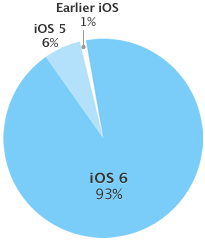

In comparison, Apple's iOS 6 adoption hit 61% after only a month, and as of June 2013 sat at 93%. iOS 7 is scheduled for release "in the fall", and I expect the adoption rate to be similar.

Modern smartphones are incredible devices, but after admiring the clean lines and beautiful construction, we focus on the display. Bring that to life and all else is forgotten. The phone becomes the display. And the display is the OS. For me, getting a new version of the OS on a smartphone is just as exciting as getting a new phone. I can't wait for iOS 7, and what I love about Apple is that I'll be able to upgrade the same time as the rest of the world.

Thanks for reading!


Thursday, June 20, 2013

Goodbye Google Reader, Hello Feedly and Digg


Google Reader was introduced through Google Labs on October 7, 2005. Since then it has become the dominant RSS feed reader on the web, and is the go-to web app for millions of people around the world. Such is its dominance, that alternative readers have long since abandoned the cause. It is especially popular among tech journalists, who use the service to ensure they monitor all their online sources for every bit of news.

I have been using Google Reader since February 6, 2007, and in that time I have read an astonishing 236,470 articles - a little over 100 articles every day!

On March 13, 3013, Google announced that it would be closing Reader on July 1, 2013, due to declining use. This is the sad reminder that greets us when you open Reader now:


For some reason, Google have never offered a compelling mobile app for Reader, but many developers have launched apps that use the Google Reader backend. Reeder, Feedly, and my personal choice, Mr. Reader, are some of the leading iOS apps in this market.

Feedly has been hard at work to introduce its own service to replace Google Reader, and interestingly, has seen its user base jump from 4 million to 12 million since Google's March announcement. Unfortunately, the "new" Google measures users in hundreds of millions, so these figures apparently are insufficient for them to retain an interest in the sector. Perhaps Google thinks users will flock to Google +, but for me Google + doesn't have the focus of a good RSS reader. Perhaps apps like Flipboard and Zite can offer similar content, but neither one allows me to scan through articles with the same speed.

So where do users go?

The aforementioned Feedly yesterday announced via their blog the introduction of Feedly Cloud, and the Feedly web app which offers a very similar service to Google Reader. Users can now migrate their feeds from Reader over to Feedly Cloud, and they have already been approached by more than 200 developers since they announced their API.


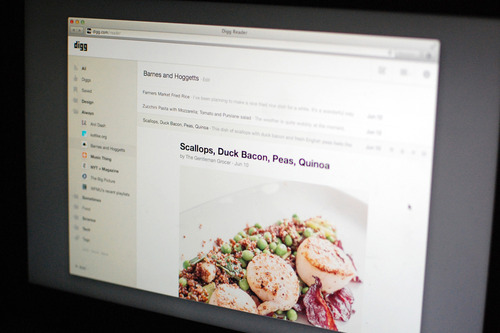
Similarly, the team at Digg have been hard at work building their app, to be called Digg Reader (of course). In their blog they announced that they will be rolling out Version 1 shortly, but have promised everyone will have access by June 26. They will also offer migration from Google Reader, and their interface looks very clean and simple. Mobile apps are in development, and will offer cloud syncing. The service will be following the freemium model, but the team have said that all the features offered at launch will remain free. You can register for the service here.


For now, these 2 are the frontrunners for replacing Google Reader, and both offer plenty of promise. For the RSS faithful, this may even be a blessing in disguise. Google gave up on developing Reader long before their March announcement. The last update to the interface was on October 31, 2011, as part of the visual redesign of all Google products in 2011. The renewed competition in the sector might lead to some new innovation, and as consumers we should benefit.

Goodbye Google Reader, we hardly knew you.


Thanks for reading.


Thursday, December 6, 2012

The Digital Land Grab

Apple have often been criticised for their closed ecosystem; the so-called "walled garden" that discourages cross-platform inter-operability. However, developing an ecosystem where the hardware and software is strictly controlled and designed to work together, and where different devices seamlessly connect and interact,  has paid off for Apple, and Microsoft and Google are quietly developing ecosystems of their own. The table below shows the devices each company has developed in an effort to take over your digital life.


 I could have included other companies, like Samsung and Sony, but they mostly run licensed operating systems on their devices. There is a certain degree of cross platform inter-operability between these devices. For example, there is an iOS app that gives remote functionality for the Google TV, and it is still possible to run iTunes on a Windows machine, and thus stream video to an Apple TV via AirPlay.  Apple tends to develop proprietary standards, making it impossible, for example, to stream video from an Android device to Apple TV. Apple does this for 3 reasons:

  1. Security - Apple is very careful about allowing other devices to connect to its ecosystem, thus preventing viruses from spreading.
  2. The Halo Effect - Building on its huge iPhone user-base  Apple can promote their complimentary devices which further enhance the user experience.
  3. Licence fees - Apple can collect licence fees from hardware manufacturers looking to incorporate features like AirPlay into the devices.

Google takes an almost opposite view, and promotes the use of open standards which allows other hardware manufacturers to easily build devices that interact with each other within the Google ecosystem.
The reason for this is because Apple and Google have very different business models. Apple make premium hardware devices, and make their profit from the huge margins they charge. On the other hand, Google make most of their profits from advertising, and anything that gets people online is to their advantage. However, this seems to be changing. With the success of the Nexus 7 tablet, and more recently the Nexus 4 mobile phone, Google are reportedly looking into sourcing their own Chromebooks to complement those already made by Acer and Samsung.

Microsoft is traditionally a software company, and except for the Xbox, their previous attempts at hardware have ended in failure. Both the Zune (mp3 player) and Kin (phone) were short-lived. With the Surface, Microsoft are making an aggressive attack on the tablet market. Time will tell if they are successful or not, but Microsoft are worried. They are seeing their traditional business being eroded from one side by Google, and from the other side by Apple. Google are offering free web-based alternatives to the MS Office Suite, and the Chromebook could eventually challenge their dominance in the PC market. At the same time, Apple's iPad is being seen as an alternative in the post-PC era, and there are many productivity apps in the App Store that also eventually offer an alternative to Office. The Apple Mac is also showing some growth in an otherwise shrinking market. Microsoft therefore feel they have to develop their own ecosystem, and try and find new profit channels like apps from the Windows Store, and subscription services like Office 365.
This 3-way battle is essentially a land grab, because all 3 companies will try and lock users into their respective ecosystems. Apple is leading at the moment, Google has the most flexibility, and Microsoft has the most to lose.

I am a huge fan of Google, and have been a longtime Windows user, but ever since I switched to an iPhone I have been drawn further and further into Apple's "walled garden"; I now have an iPad 3 and a latest generation Apple TV. I have been hugely disappointed in Windows 8, so I'm now considering switching to one of the new iMacs as my main home machine. I still use Gmail, Google Calendar, Google Docs, etc, and I will continue to use my 18 month old Windows 7 laptop until I can afford to replace it, but more and more I look to Apple for my digital fix. Which ecosystem do you use?

Thanks for reading.

Monday, September 26, 2011

Which Mobile OS?

When you look at the dozens of phones available to you, what do you look for; the physical device, with it's mirror-like screen and brushed aluminium finish, or do you consider what makes each phone perform the myriad tasks you intend performing? If you haven't thought in these terms, you should. You're about to lay down a sizable chunk of your hard earned cash, or tie yourself into an expensive 24 month contract, and you should really know what you're buying.

To me, it's all about the software. These days, the main manufacturers are all capable of making exceptional devices that vary little from each other in terms of hardware. However, the software is constantly evolving and improving, and if you pick the right phone, you'll continue to get updates and upgrades that will improve your experience, and even after 2 years, you won't feel like you're stuck with old technology.

As can be seen from the graph of worldwide 2011 Q2 smartphone sales to end users by operating system, according to Gartner, Android has clearly captured the lion's share of the market, up 13,3% since 2010, with its multiple manufacturer support from Samsung, HTC, Motorolla, LG and Sony Ericsson. However, Google's purchase of Motorolla could spell trouble for Android if the other manufacturers feel like they're not getting equal treatment and start looking to other OS's for their premium models. Android has another problem, and that is despite regular update to the core OS, these often aren't rolled out to every device, and it's left to the manufacturers, and then the carriers to decide which phones should get upgraded. Google are trying to address this problem, and it may improve with their newer phones.


Symbian may be in 2nd place, but don't be fooled. Symbian is in freefall, losing more than 10% in the last year, and down from complete market domination just 4 years ago, when they held 63,5%.


Apple's iOS takes 3rd place, and considering they essentially only have a single, premium handset (plus a discounted previous generation model) available, that's pretty good. iOS is actually still gaining market share, and I expect continued growth as the next generation is made available to more carriers in the key US market. The launch of iOS5 and the next generation iPhone will also see renewed demand for the iconic device. Where Apple really scores is that they release software updates directly to the customer, so everyone gets to run the latest version all the time, and Apple continue to make their software backwards compatible for several generations.


RIM hold on to 4th place with their Blackberry range, but they're down nearly 4% since a high of nearly 20% in 2009, and despite popularity with text hungry teens, management problems continue to plague the company that was once considered the trendsetter. Their OS is dated; the newly released Blackberry 7 is too little, too late. Blackberry QNX might save them, but launch timing has been pushed out numerous times, so don't hold your breath. 


The dark horse is Microsoft's Windows Phone 7. While it hasn't captured much share yet, Nokia will launch a range of phones before the end of 2011, which may turn things around for the software giant. They've also recently launched a preview of Windows 8, which will use a common format, borrowed from Phone 7, across all devices, from desktops to tablets and mobile phones. This is huge - who wouldn't want a phone that looks and acts just like all their other devices, and sync up seamlessly via the cloud? The jury is still out on whether the UI is suitable for non-touch screens, but regardless, the tie-up with Nokia will be sufficient to see some substantial growth over the next 2 years.


So where does this leave us? There is room for 3, maybe 4 OS's in the market. Why not more? Key to the success of any modern OS is the availability of apps to run on these devices, and developers will not support an infinite number of systems. Android and Apple currently rule the roost, so it'll be between Phone 7 and Blackberry OS to take 3rd. My money would be on Phone 7, because Microsoft have too much money to let it fail. That will leave Blackberry to battle on in 4th place, with a shrinking market share.


So when you're confronted with all those shiny new phones that promise so much, think about where those brands will be in a years time, because you don't want to be stuck with a device that is no longer supported.


Thanks for reading.


Sunday, September 25, 2011

Mobile Messenger Services Are A Mess

The IM sector is red hot again these days, as people turn to these services to replace the ridiculously overpriced SMS services offered by the carriers. RIM have managed to do this very successfully with their BBM messaging service, despite the fact that BBM is limited to Blackberry devices. For many, this is the number one reason to purchase a Blackberry. In the teen market this is currently the phone of choice.

Seeing the success that RIM has had with this strategy, Google and Apple have rushed to bring similar products to market.

Google's strategy is a bit confusing. Google Chat (or is it Google Talk?) has been developed into a great IM package that works across desktop and mobile, and includes video, SMS, group chat and more. Then along comes the Google+ mobile app and now we have Huddle, a very simple group chat app, built into the G+ app. Now I'm not technical, but why didn't Google just incorporate their existing IM package? Huddle has now been updated to include photo sharing, and simultaneously changed its name to Messenger. The problem with this service is that it's mobile only. For me, turning away from my desktop, with it's large ergonomic keyboard, to reply to a message on my phone, with it's tiny keyboard, is very frustrating. It makes no sense at all!

In early October (hopefully) Apple will release iOS5 into the wild, and one of the new features is iMesenger. I believe it will work across mobile and desktop, but will unfortunately be limited to Apple devices, which makes it pretty useless. I understand that the strategy is to turn each iPhone user into a salesperson: "Get an iPhone like mine and we can chat for free!" It hasn't worked with Facetime, and it won't work here. Really Apple, am I only allowed to be friends with people that also use Apple products? C'mon!

I'm not a Facebook fan, but at least they got this right. Well almost. Facebook Messenger works in the browser and in their mobile app, and now Facebook have launched a separate Messenger app for smartphones, which is a great idea, as you don't have to open the main app first. Are you listening Google? The problem: you can only chat with people you have friended on Facebook. I don't want all my work colleagues following my social activities on Facebook, but it would be useful if I could text them!

A number of startups have also attempted to gain some traction in this sector. Beluga was gaining in popularity, but Facebook bought them out, and created their Messenger service. Whatsapp has a big following, and it's not OS specific, but there is no desktop version available, so it's mobile only.

So what's the answer? Currently, I use Google Talk/Chat, Google+ Messenger, Facebook Messenger, Whatsapp, and when iOS5 comes out I'll also use iMessenger. With my Blackberry carrying friends I feel a bit left out, and have to hope they use Whatsapp. Of course, in an emergency, good old SMS is still available, but I would love to be able to move away from SMS entirely. Until one of these companies can build all this functionality into one app, I'm forced to keep using a combination, depending on whom I'm chatting with. What a mess!

And who owns the rights to the Messenger name anyway?

Thanks for reading.

Tuesday, October 26, 2010

Sony Ericsson Xperia X10 Mini

I've long been a Nokia fan, but over the last few years they seem to have lost the plot. Ever since the original iPhone was launched back in 2007, Nokia have steadily lost market share in the smartphone market. Nokia's loss has been Android's gain; in less than 2 years the Google developed mobile operating system has gained substantial footing in this competitive market.

As a self-proclaimed Google fanboy, the attractions for any Android phone are numerous. Above all, the auto sync with gmail, calendars and contacts. After years of wrestling with Mail for Exchange and apps like Emoze, I couldn't wait to get my hands on the real deal!

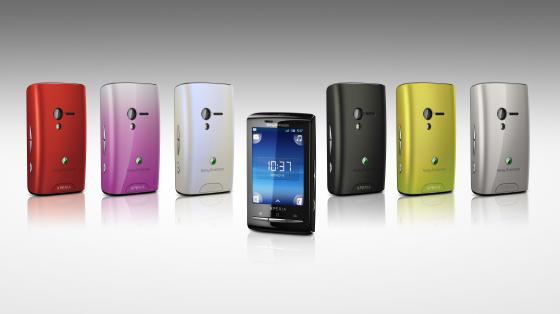
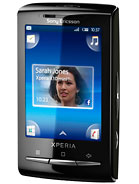
My chance came this week in the form of a Sony Ericsson Xperia X10 Mini. I have this phone on a short term loan from my girlfriend, but I already dread the day I have to go back to my old Nokia 5800. Anyway, back to the phone: this is the smallest Android phone available, and comes in at a very competitive price. It offers the convenience of a touchscreen smartphone, without too much complexity or any of the bulk, weighing in at a featherweight 88g. An ideal handbag phone. The interchangeable coloured backcovers should also appeal to the style conscious. But that's not to say it lacks oomph, I've been very impressed with how smoothly the phone has handled everything I've thrown at it. The 2.55" capacitive screen doesn't offer the highest resolution either; at 240 x 320 pixels don't expect the "retina" display.

The biggest problem with the X10 Mini is shared with its big brother, the X10. Both phones are still running Android 1.6 (Donut), and the update to 2.1 (Eclair) has been pushed back to the end of October. Judging by the reaction on the various forums, everyone is desperate to get their hands on the upgrade. However, its still not clear if or when the Mini will get 2.2 (Froyo). We can only hope...

My other problem has been the battery capacity. At first I couldn't go a whole day without recharging. However, after a weeks use, and several charge/discharge cycles, performance has improved slightly. On the advice of several forums members, I installed the JuiceDefender app. The free version doesn't offer many features, but by reducing the length of time the phone accesses data in the background, the battery life is extended substantially.

Another useful free app is Timeriffic. This allows you to set various 'profiles' for different times of the day. For example, an essential one is to switch off the notification at night. Getting woken up every time I receive an email is not an option!

The X10 Mini has a number of homescreens that can be set up with widgets, one for each page. Flicking through these will give you instant access to your calendar, weather reports, Google Search, etc. Set these up as you like. A vertical flick across the screen reveal the icons for any apps you have loaded. Again, a horizontal flick takes you from page to page, with 9 icons per page. This system works very well, and makes good use of the limited screen space.

The one feature I haven't mentioned is Timescape. This Sony Ecicsson app combines your Twitter and Facebook stream with your text (SMS) messages, MMS and missed calls, into tiles that flow chronologically on the screen. The effect is awesome, but due to concerns about excessive data usage I disabled it almost immediately!

So, as my introduction to Android, what do I think? Did it live up to my expectations? Definitely! Android highlights how dated Symbian has become. I love that almost everything can be modified or adjusted, if not natively, then by using one of the thousands of available apps. As of right now, us South Africans do not have access to the paid apps in the Android Market (although that will apparently change shortly), so it was a nice surprise that almost every app I wanted has been available for free. The Market itself could use some work, especially on discovery, but compared to the Ovi Store it's been fantastic! Looking ahead, I'm thinking about what phones will be available when my current contract comes up for renewal in the new year. One thing I know for sure: it'll be an Android!

Thanks for reading!

Friday, April 16, 2010

Google Needs It’s Own iTunes

Anyone that’s read my blog before knows that I’m a Google fanboy, and despite owning an iPod Nano, I’m not a huge fan of the ‘walled garden’ approach of Apple. I cannot deny that Apple’s hardware design is market leading, but I hate being a slave to Steve Jobs’s vision of our digital life.

A big part of the iPod/iPhone success can be directly related to the success of iTunes. I personally stopped using iTunes when I discovered MediaMonkey, because I only sync music and podcasts, and MediaMonkey is a superior product for this purpose (in my opinion). However, for the full media experience, users of the latest generation of iPods, and especially iPhones, users want to sync video and apps as well, and MediaMonkey doesn’t have this capability. In South Africa, we still don’t have (legal) access to the iStore (for music), so this is also not a requirement for me.

iTunes has it’s faults, but once you have all your media set up, the process of syncing your Apple device is as easy as plugging it in and hitting ‘sync’. It just works. And people that have used it have come to expect this simple ‘one click’ functionality.


Google doesn’t offer any comparable software that can do this with your Android based phone, and until they do, they won’t enjoy the same device loyalty that Apple has. The majority of people that use iTunes aren’t going to settle for anything less.
What Google doesn’t seem to realise, is that most people are still more comfortable searching for content on their home PCs. The ease of using a big screen and physical keyboard far outweighs the convenience of doing the same thing on a portable device. I want to be able to sit at my PC, access the internet via my uncapped broadband connection, download an album, a couple of new apps, select a photo album from my hard drive that I want to show my mates, rip a DVD, and sync the whole lot to my portable media device/phone, preferably wirelessly, with one click. Is that too much to expect?
The technology to do all of this exists, and to mash it all together into one application would be simple for a company with the resources of Google. The Google owned Picasa application is one of the best photo (and video) managers available - a similar app for music would be brilliant. It could even be added into Picasa. Picasa syncs to the online Web Albums app, and it would be simple to create a similar online music app. They could even use the Lala model, whereby you don’t have to physically upload each song, but if it’s on your HD, it’s added to your online library from a central server. I could imagine listening to music loaded on my Android based phone, and if I can’t find the song I want, switching to the web app and streaming it to my phone. Don’t own it? Use the search function and either buy it and download it, or stream it for a couple of cents.
Such an online photo/video/music web app would fit in perfectly with the soon to be released Chrome OS. Google’s vision for Chrome OS is that it would run on fairly basic machines, with minimal, solid state hard drives. No space for a 40 Gb music library! The OS will be a browser. However, they haven’t offered a solution for playing back media yet. Viewing photos and video could be covered by Picasa Web Albums, but to date they are relying on 3rd party apps like Spotify for music. They would be much better served if they offered their own app.
What’s in it for Google? Well, once a customer had the software set up and all his media connected, he wouldn’t want to switch to another platform and start all over again. when his contract expires, he’s going to upgrade to another Android based phone, or Chrome OS based laptop or tablet. He would be locked in. That’s the real beauty of iTunes.
Thanks for reading.

Thursday, February 25, 2010

My Take on Google Buzz


Many, many blogs have already commented on Google Buzz since it was unleashed upon the world on the 9th of February. I wanted to wait a while before chipping in with my 2c, so that I could get a feel for what Google might be trying to do with their latest release.

So, by now, most of the people that might read this blog have already tried Buzz for themselves, so I won't go into all the features. Instead, I want to look at what Buzz means to Google, and where Google is perhaps positioning Buzz. This is just my take on it, and is by no means official.

Google may have started out as an internet search company, but "as a business, Google generates the majority of its revenue by offering advertisers measurable, cost-effective and highly relevant advertising, so that the ads are useful to the people who see them as well as to the advertisers who run them." 

This business is dependent on people using the internet. The more page views, the more money Google makes. As simple as that. However, Google have not sat back and let nature take it's course. They are constantly developing new apps to make the internet experience ever more compelling, and they are looking at ways to make the internet an indispensable part of everyday life.

When people complained the internet was too slow for some of the apps Google was developing, they introduced their own browser to speed things up. Foreign languages a problem? Google have invested heavily in translation tools.

So where does Buzz fit in? Well Facebook has grown into the king of social networking, with in excess of 400 million users. Facebook offers the complete intenet experience for many users;  messaging, which is soon to grow into a full email service (if the rumours are to be believed), instant messaging, photo albums, real-time micro-blogging, and thousands of apps for games etc. Oh, and they also have the best system to stay in touch with your real-life friends available today. The problem for Google is that many of these people using Facebook aren't venturing out of it's "walled garden", and are thus avoiding the Google advertising that has infiltrated the rest of the internet. Google needs to be a player in the social networking game.

Of course, they do have Orkut, but that has not taken off in their home market, and the U.S. is where the real advertising dollars are. Google already have apps that compete very admirably against the individual aspects of Facebook, and then some, but currently they are very disjointed. And they had nothing in the real-time micro blogging arena at all.

With this background, Buzz starts to make sense. They took their most popular app, Gmail, and baked Buzz right in there. You couldn't miss it. They immediately had more than 140 million users! Privacy issues aside, straight out of the box, Buzz integrates very well with the other Google apps like Reader and Picasa, but not so well with the likes of Twitter and Friendfeed. There have also been a lot of complaints about the amount of 'noise'. Don't worry, these issues will get sorted out. Google is taking Buzz very seriously!

What excites me is the potential of Buzz. Google will get the real time problem with Twitter sorted out, and will add links to other sides too. Imagine Buzz a few months down the line, when it has become the go-to site for all your social networking needs. You'll link with your friends, both real and virtual, from sites all over the web, in one place. Facebook may resist, and are probably big enough to do it, but I foresee smaller sites agreeing to Google's terms in the hope that it'll drive more people their way.

So what else does Google need to do? Well, a lot of people have complained about the integration with Gmail. I say integrate more! I think that Google should have one main page with Profile, Reader, Contacts and Calendar, all together with Gmail/Buzz. In fact, I don't know why Google hasn't done this - maybe it is a speed issue. I would hate Gmail to slow down to Windows Live speeds! However, I think Profile needs to become an integral part of the Google experience. People maintain their profiles in other apps, why not Google. The Google Profile should be central to your on-line personality.

A lot of people have drawn comparisons between Buzz, Facebook and Twitter. For me, Twitter isn't even in the same league, and I wouldn't be surprised if their numbers dropped off significantly. If you consider what Google offers; email (Gmail), instant messaging (Gtalk) and micro-blogging (Buzz), it sounds very similar to Facebook. Add photo albums (Picasa), and you've got all the main elements. Then if you add Reader, Calendar, Tasks and Docs, you've got (in my mind) a Facebook killer! It may not all be under one roof like Facebook, but gradually we are seeing better integration between these products. The fight for our eyeballs is far from over, and I think that the consumer will benefit from the competition. For me, I love Gmail, I think Buzz compliments it well, and as long as they keep Farmville and the like out, I'll keep Buzzing!

Tuesday, December 15, 2009

Google Music - An Opportunity Missed

The following is pure speculation, with a touch of hopeful optimism, and not based on fact or any insider knowledge.

Google's plans to dominate your every online move is well documented, and considering their basic business model, it makes a lot of sense. Their main revenue stream is from advertising, and quite simply, the more people they can get online, the more their advertising will be seen. So how to get more people online? Simple; create a set of applications, add a 'cool' factor to lure people in, and then give them away for free. They started with Gmail, added calendar, docs, photo editing and management, earth, maps, and so the list keeps growing.
People's acceptance for working in the 'cloud' is growing, and their concerns over privacy are diminishing. Next year they'll launch Google OS on machines that are simply a vehicle for the Chrome browser, and I have no doubt people will buy them in their millions.
What are the 3 main uses for a computer?

  1. Research - This is where Google started; their search engine dominates worldwide.
  2. Work - Google already has this covered with Google docs, and several large corporations have already made the transfer to the 'cloud'.
  3. Recreation - Google has a very popular photo application in Picasa, and has video wrapped up with YouTube. They have also been active in Social Networking, although Orkut wasn't as successful as they would have liked. However, Friend Connect continues to grow, and rumours about Google's interest in Twitter keep resurfacing.
Where it falls short is music. How Google OS will handle music has not been fully addressed, as the machines intended to run Google OS are not intended to have the huge memory required to store thousands of MP3's. Although their are plenty of options for streaming music on the web, these sites have been faltering under the burden of fees paid to the music labels, and are more and more turning to subscription based services.


Lala had a great model, and would have been a perfect fit for 'Google Music". On one's main PC, you access your Lala account and upload your entire music library to Lala, and then access it from any machine, via the web, for free. And legal. And the beauty of the system is that you don't have to physically upload your entire collection which would use many GB of bandwidth (and take days, if not weeks) - Lala scans your music library and registers each song in it's system. Then, if you want additional music, there is a nominal charge to allow streaming, or the option of downloading the song at a cost comparable to iTunes.
Lala sounded like they had the perfect model for Google, and they were for sale. But Apple beat them to it, and we will probably see these features being rolled out in iTunes at their next release.
The unfortunate problem with that is Apple's notorious 'walled garden'. You can only access iTunes with your iPod or iPhone, and although there are millions (and millions) of such users, supporters of Google's own Mobile OS, Android, will not be able to access Lala on iTunes. Google really slipped up on this one. Hopefully they have an even better solution!

Friday, June 12, 2009

How to Improve the Google Experience

We all know that Google has expanded far beyond just Search, but from the outside looking in, it feels like Google have developed a whole bunch of individual apps, and are now trying to link them up. This is understandable, as many of these apps were companies Google bought out when they showed some promise in the market. Obviously, we mere mortals are not privy to the Google Master Plan, but the whole process seems very disjointed to me.

Central to Google’s effort are Contacts. This is the Facebook equivalent to ‘Friends’, and is the list of people you communicate with regularly, via Gmail or Chat, tag or share with in Picasa Web Albums, share blogs with in Reader, and if you’re using Google Sync, speak to on your cell phone. Web 2.0 is about Social Networking, and Social Networking is about friends, and Contacts are your Google friends. That’s great, but I just think the integration has been poorly executed to date. Let me explain.
In Picasa Web Albums they introduced face recognition. It’s a brilliant technology, and often surprises me with its accuracy. The app chooses a common face from the album you’re analysing, then offers a list of your Contacts to choose from. If the person is not a contact, you can then add their name and that name is added to your contacts. Google assumes that anyone you’re prepared to name in a photo deserves to be on your Contacts list. I actually don’t have a problem with that, although the result is that my ‘All Contacts’ is full of our kids’ friends, who still being in the single digits age-wise, don’t have cell phones or email addresses!
Anyway, where Google could improve the process, in my opinion, is when it comes to adding details to those contacts. After clicking on ‘Add a picture’ on their page in Contacts, you’re presented with a number of options to add a picture:


However, choosing the Picasa Web Albums option should take you to a suitable series of their tagged photos, but it doesn’t. It gives you a list of all your albums, and you have to hunt for that elusive photo that you tagged in the first place!


In Reader the integration is even worse. You have the option to share items from reader with your friends. The options are your Friends, or Chat buddies. Problem is, is that Friends refers to your ‘Friends’ part of your Contacts. Click on friends, and they’re all given access. Ah, there’s an option to remove each individually, that’s great. Remove a couple who you don’t think would be interested in your reading habits, and guess what? They’ve been removed from your Friends within Contacts! Next, you want to share with someone from Family, or perhaps a Co-worker? Can’t be done, unless you add them to Friends of course. Come on Google, this is an easy one to fix.


One of the features I would love to see Google add, with regard to Contacts, is integration with Calendar. Google recently added a function to add birthdays and anniversaries to your Contacts. So how hard would it be to automatically add those dates into Calendar? Problem is, Google Calendar doesn’t know how to handle birthdays. It adds them as all day events, which is fine within their app. It adds a pretty little block to the top of the specified day. However, sync that with your phone’s calendar, and you end up with an event running from midnight to midnight. Google needs to take a leaf out of almost any other Calendar; it needs options to add birthdays/anniversaries, reminders and notes to the main calendar, in addition to meetings, and the newly added Tasks. Unfortunately, Tasks don’t get added to the main calendar, so aren’t included in the sync.


I don’t think these changes would be that hard to implement. If there’re any Google employees reading, how about using your 20% time to fix these?


Thanks for reading.

Thursday, June 4, 2009

Are You Ready To Do The Google Wave?

I’m a big fan of Google; like most people I use Search, but I also use Gmail, Calendar, Reader and Docs on a daily basis. I also use Picasa for quick viewing my photos, and Picasa Web Albums to share them on the internet. I use Google Maps, Earth and obviously Blogger.
There are other products that do the same thing, and I use some of those too, but I like the way that Google is starting to integrate these services. For example, when you use the face recognition feature in Web Albums, it offers a list of your contacts (just like Facebook’s photo tagging), and if you add someone new, it automatically adds that person to your contacts.
Contacts has now been given its own page, as well as being bundled with Gmail, which indicates Google has bigger plans for Contacts than just email.
Which brings us to Google Wave. If you haven’t heard about Google Wave yet, you can read about it
here. In it’s simplest form, Google Wave is described as next generation email, or as Lars Rasumussen (one of the developers) put it, “Wave is what email would look like if it were invented today.”
But it’s so much more than that. Google Wave combines email and instant messaging, and offers them in real time. It also allows drag and drop functionality for adding photos to a ‘wave’, which then immediately become visible to the other participants in the wave. Oh, did I mention that any wave can have multiple participants? All you have to do to add people is drag them in from your Contacts list. If they’re on-line, indicated by a green dot, the wave will pop up in their in-box and they’ll be able to join the conversation. If they’re off-line, they’ll be able to open the wave and read it like an email, and doing so would bring the wave back to live status.

I can imagine that if you had a number of people commenting simultaneously it might become very busy; all this live action might take some getting used to.
So what is Google really trying to do? I see this as Google’s entry into social networking. Consider Facebook. Facebook has  a profile page and a list of Friends, Google also has a Profile page and its Contacts. Facebook allows sharing of photos and the facility to allow friends to comment, Google Wave does the same. Facebook shows which friends are on-line, and allows instant messaging. Google Wave has a dynamic combination of email and IM.
The major difference in their approach is push and pull. Google Wave requires one to ‘push’ the content to one’s friends; on Facebook one uploads content and relies on friends accessing (‘pulling’) it. Which system is better remains to be seen.
One of the common complaints is that there are too many ways to communicate on-line. I would love one communication tool. Facebook has a form of microblogging, photo sharing, IM and is soon going to add email. This must be a worry to Google. They already have email, IM and photo sharing, but Wave combines them into one application, adds Twitter integration, gaming, document collaboration (did I mention those?), and a lot more.
Will people want both services, or will people choose between them. At the end of the day, I think people will go with whichever service offers the cleanest, simplest user interface, and I fear Google Wave might be too complicated and confusing. It’ll certainly gain a lot of attention when it’s released later this year, and I can’t wait to give it a try.

Thanks for reading.

Friday, February 6, 2009

Something different

It's not well known, but I'm a big Google fan. I use Gmail, Reader, Docs, Calendar, Picasa and Blogger regularly. I love the idea of working in the cloud; having your data available wherever you have access to the internet. And I love that the apps are constantly developing and improving, and I believe this will be the future of computing.

Google development does seem sporadic sometimes, but in the last few days they've been releasing revisions and new tools daily. It's been incredible.

On Gmail, they've added offline functionality, a revision to tags to make them more like folders, and today they added multi-inboxes. On my gmail page I've also got a Twitter gadget and recently added Google Tasks. If you compare that to the UI of Webmail.co.za, the awesomeness of Google is put into perspective.

On other applications, Latitude allows you to see where your friends are on Google Maps, and Google Earth 5 allows you to visit the ocean depths from the comfort of your desk.

However, not all Google apps seem to be getting the same attention. Blogger, for example, has been stagnant for ages. There have been no improvements or additions for ages. Gadgets on their layout page that are more than 6 months old are still marked as 'new'. It's no wonder people are moving their accounts to Wordpress and the like.

One of Google's acquisitions, GrandCentral, has been dormant months. This app allows a user to have a single phone number, and when that number is dialed all or any of the phone linked to the account will ring. This can be set up based on time of day, groups, etc. I think the potential for this is enormous, but Google either doesn't see it's potential, or hasn't figured out how to montise it yet. Google bought the company in July '07, but invitations were only available from existing users (like Gmail in the early days). However, no new invites have been issued since early 2008. 

I remain a Google fan, but please Google, give all the apps a freshen-up and spread the awesomeness around.